

What to check when you inspect a property in Lagos
Photographs hide drainage, power arrangements and structural shortcuts. Here is what to look at on site, what to ask the neighbours rather than the agent, and what to do before you leave.
5 min read
Most Lagos inspections take twenty minutes and happen at the wrong time of day. The agent opens up, you walk the rooms, you admire the kitchen, you leave. Almost nothing that will determine whether you are happy in this house three years from now is visible in that visit.
This is what we look for, in the order we look for it.
Arrive before you arrive
Start on the approach road, not at the gate.
Look at the level of the compound relative to the road. If the gate sits below the tarmac, water has somewhere obvious to go and it is not away from the house. Look for raised thresholds at the gate and at the front door, a step that has been added rather than designed is usually a response to something.
Look at the walls at knee height, inside and out, for a horizontal tide line, discoloured render, or a band of newer paint that stops at the same level all the way round. That line is a record.
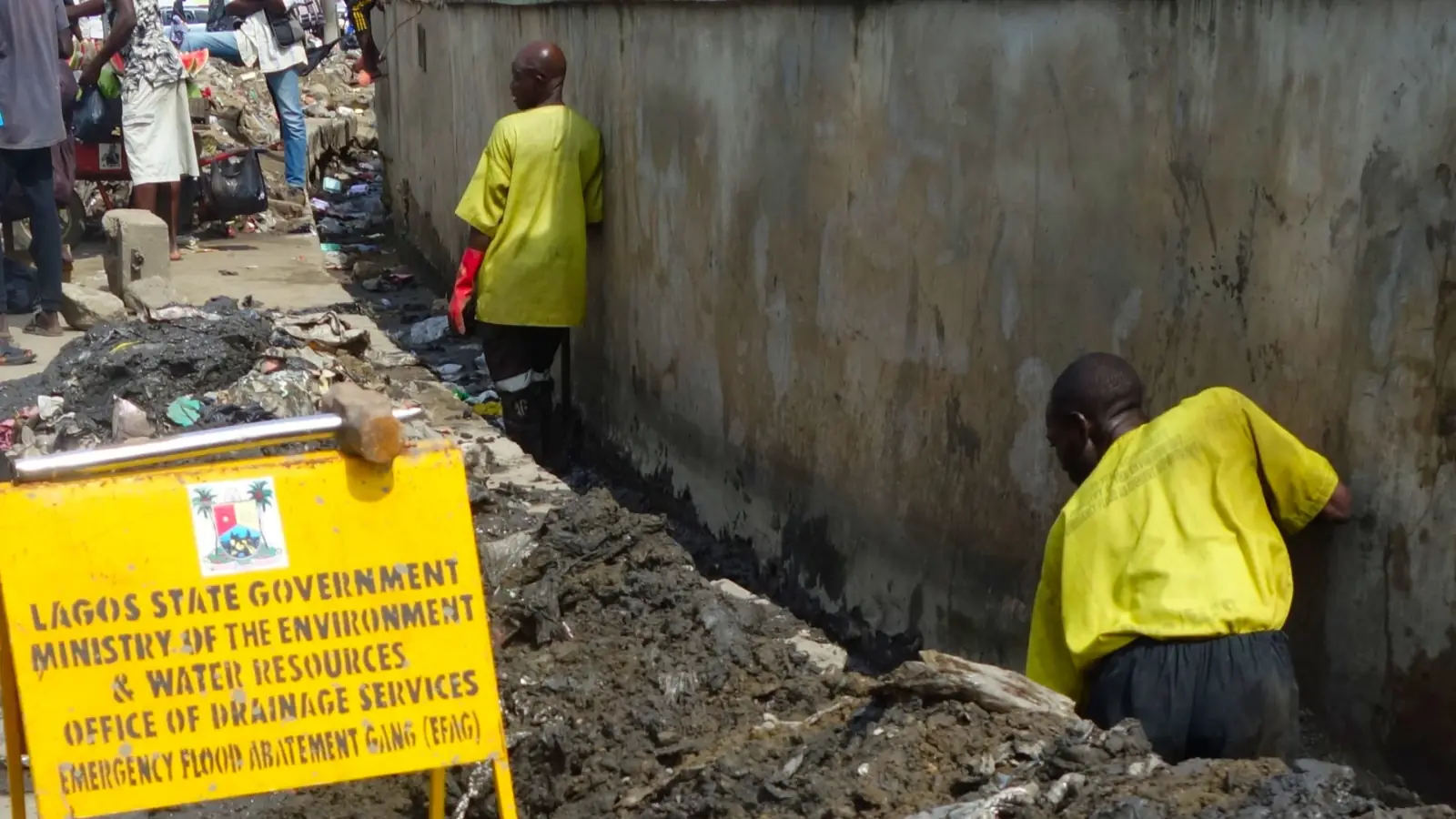
Check whether the street drains are open and clear or silted and lidless. Lagos State clears drains through the Ministry of the Environment, but between clearances the responsibility is effectively local, and a street that has organised itself is a different proposition from one that has not.
Ask the residents, not the agent
The single most valuable question on any Lagos inspection is asked to a neighbour, a security man, or the person selling recharge cards at the junction: how bad does this road get in September?
Nobody who lives on a street that floods will lie about it to a stranger, and nobody selling a house on it will volunteer it. Ask two or three people. Ask about the road, the power, and who the landlord's association is.
The agent tells you what the house has. The neighbours tell you what the address costs.
Power: get specific
"24-hour power" describes an intention, not an arrangement. Find out the actual structure:
- Which band is the feeder on? Band A carries a committed minimum of twenty hours a day and the tariff that goes with it, in 2025 between ₦219.70 and ₦241.45 per kilowatt-hour depending on the distribution company.
- Is there a shared generator, an individual one, or both? Who buys the diesel, and is it inside the service charge or outside it?
- Is the meter prepaid, and is it in the property's name with no inherited arrears?
- If there is an inverter or solar installation, how old are the batteries? Battery replacement is a large, imported, dollar-priced cost that sellers rarely mention.
Ask to see a recent bill. One piece of paper resolves most of this.
Water
Where does it come from, and what happens to it before it reaches a tap?
Borehole depth and age, pump type and last replacement, whether there is treatment or just filtration, storage capacity in the overhead and ground tanks, and whether the ground tank is sealed. Run a tap for a full minute in the furthest bathroom from the tank and watch the pressure and the colour.
Structure
You are not a structural engineer and neither are we. But the common shortcuts are visible:
- Diagonal cracks radiating from the corners of windows and doors, or cracks over lintels
- Fresh screed or paint in only one area, particularly at the base of walls or on a ceiling
- Doors that will not close squarely in their frames
- Sag or staining on ceilings under bathrooms above
- Damp, mould or a persistent smell in ground-floor rooms and under stairs
Get onto the roof if you can, or at least into the roof space. Look at the trusses, the underside of the sheets, and the gutters. Roofs are the most expensive thing to be wrong about and the least often inspected.
Documents, on site
Bring the survey plan with you and check the pillar numbers on the ground against the ones on the paper. It takes ten minutes and it is the only way to confirm that the boundary you are being shown is the boundary you are buying.
If anyone appears during the inspection to claim a right over the land or to demand a fee for access, stop. The Lagos State Properties Protection Law 2016 made this conduct criminal, demanding money for land you do not own carries a fine of up to one million naira or two years' imprisonment, and unlawful occupation up to five million naira or five years, with a dedicated state task force and jurisdiction in the special offences court. The law being on your side is useful. Discovering the problem before you have paid is more useful.
Before you leave
Photograph everything you asked about, especially the things that looked repaired. Note the time and the day. Write down what the neighbours said while you still remember the wording.
Then go back once more, at a different time, early morning on a weekday if the first visit was a weekend, or after dark if it was daylight. Traffic, noise, security presence and whether the street lights work are all invisible on the first trip.
We inspect every property listed on this site and check its title document before it goes up. That is not a substitute for your own visit, and we would be suspicious of anyone who told you it was.