

Why Lagos property prices hold when the naira does not
The naira lost roughly two-thirds of its dollar value between June 2023 and early 2024. Lagos property did not reprice downwards. The reasons are structural, and they cut both ways for a buyer.
5 min read
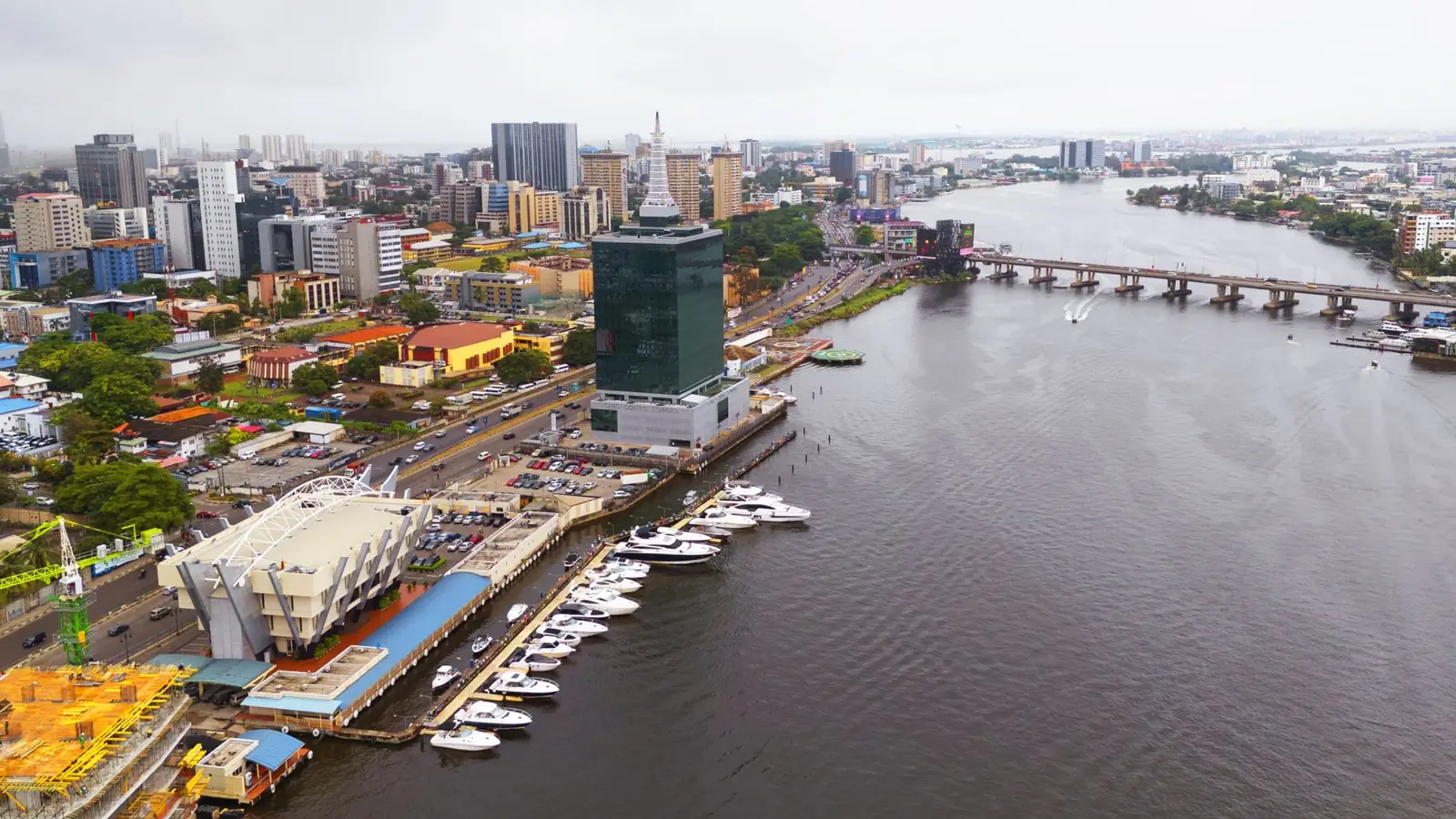
On 14 June 2023 the Central Bank collapsed Nigeria's multiple exchange rate windows and let the market set the price. The official rate was ₦464.5 to the dollar that day. A week later it was ₦708.2, a third of the currency's value gone inside seven trading days. By early 2024 it had passed ₦1,600, and by May 2025 the official rate was hovering between ₦1,500 and ₦1,610.
Anyone holding naira lost. Anyone holding Lagos property, in naira terms, did not.
That asymmetry is the single most important thing to understand about this market, and it is widely misdescribed. Lagos property is not a hedge because of anything magical about land. It holds because of four specific mechanics.
Almost everything a building is made of is imported
Cement is produced locally at scale. Very little else in a finished Lagos duplex is. Reinforcement steel, tiles, sanitaryware, aluminium window systems, doors, ironmongery, electrical fittings, air conditioning, lifts, generators, paint additives, waterproofing. These are landed goods, priced in dollars, and repriced in naira the moment the rate moves.
A developer who started a project at ₦460 to the dollar and finished it at ₦1,550 did not simply lose margin. Their replacement cost, what it would take to build the same thing again, roughly tripled in naira. That replacement cost is the floor under existing stock, and it moves up with the rate rather than down with sentiment.
Existing buildings do not get cheaper when the currency falls. Every competing new building gets more expensive to produce.
There is almost no mortgage market to unwind
This is the mechanism most often missed by people applying developed-market intuitions to Lagos.
Mortgage penetration in Nigeria sits below one per cent of GDP, against over thirty per cent in South Africa and above seventy per cent in advanced economies. Rates are punitive: the prime lending rate was around 15.5 per cent in the second quarter of 2024, lenders were permitted to charge up to nearly 29 per cent, and mortgage products in practice run somewhere between 18 and 25 per cent a year.
Almost nobody buying a house in Lagos is borrowing to do it. That has an obvious consequence, affordability is dreadful and ownership is concentrated, and a less obvious one. In a leveraged market, a downturn produces forced sellers: margin calls, repossessions, banks liquidating collateral into a falling market. Lagos has almost none of that transmission. An owner who bought with cash and does not like today's offer simply does not sell.
Prices do not fall. Transaction volumes fall instead, and the market goes quiet rather than cheap.
The buyer pool is partly dollar-denominated
Diaspora buyers, oil and gas earners, and anyone with dollar income experienced the devaluation as a discount. A budget of fifty thousand dollars bought roughly ₦23m of Lagos property before the float. The same fifty thousand dollars bought around ₦77m by early 2024.
That is why marketing shifted so visibly towards diaspora channels through 2024 and 2025, and why some segments, particularly completed, titled, serviced stock on the Island, firmed rather than softened while the naira fell. Sellers were pricing against a buyer whose purchasing power had tripled.
The sector is now too big to be a sideshow
After the National Bureau of Statistics rebased Nigeria's GDP in 2025, real estate emerged as the country's third-largest sector, ahead of oil and gas, with the sector valued at roughly ₦41.3 trillion as at 2024. Estimates of the national housing shortfall vary widely, figures between 22 and 28 million units are quoted freely, while the National Housing Data Technical Committee put the 2025 deficit at about 14.9 million units, but even the conservative end describes structural undersupply in the country's largest urban market.
Undersupply plus rising replacement cost plus an unleveraged buyer base is a durable floor. It is not a guarantee of appreciation.
What this means if you are buying
Three things follow, and none of them are cheerful in the way property marketing usually is.
First, you are not going to time this market by waiting for a crash. The mechanism that produces crashes elsewhere, forced deleveraging, is largely absent here.
Second, the naira price you are quoted has already absorbed the devaluation. Buying Lagos property in 2026 is not buying a currency hedge cheaply; it is buying an asset that has already repriced. The hedge is against what comes next, not what has happened.
Third, and most practically: because prices are sticky and volumes are thin, the spread between a well-negotiated purchase and a badly negotiated one is much wider than it would be in a liquid market. There is no efficient price discovery. There are individual sellers, individual circumstances, and a great deal of variance.
That variance is where the work is, and it is the reason we inspect every property we list and check the title before it goes up. In a market this illiquid, the difference between a good purchase and a bad one is almost never the headline number.