
What the Blue and Red Lines change about where Lagos buys
Lagos now has two operating rail lines for the first time. The transport effect is measurable. The property effect is being asserted far more confidently than the evidence currently supports.
5 min read
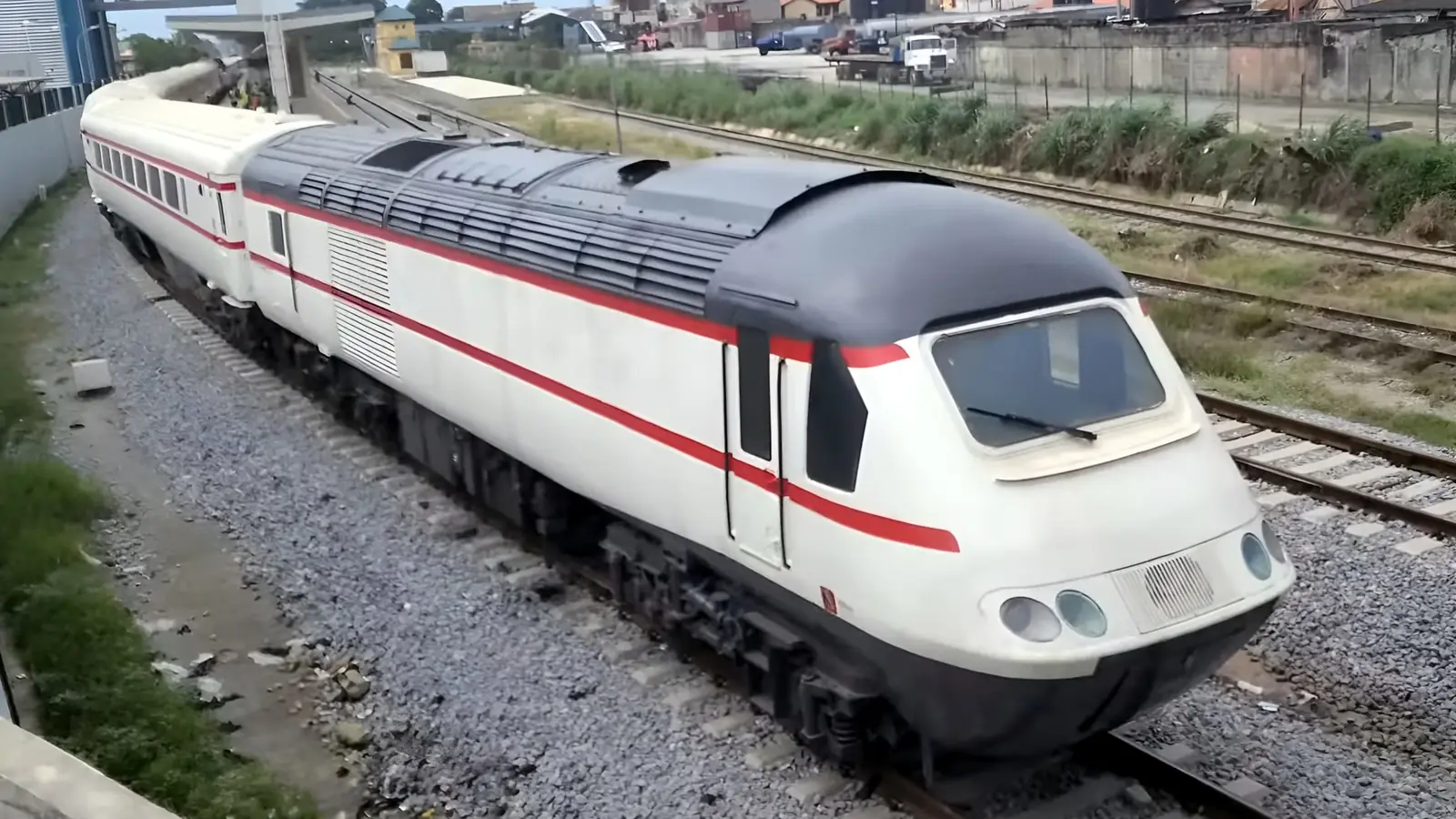
The Blue Line opened to passengers on 4 September 2023, running the first thirteen kilometres from Marina to Mile 2, the first functioning intra-city electric rail service in Nigeria. Regular passenger service on the Red Line, from Agbado to Oyingbo, began on 15 October 2024, following the line's inauguration earlier that year.
Two operating lines in a city that has spent four decades planning them is genuinely significant. What that means for property prices is a separate question, and it is being answered far too confidently.
What the ridership actually shows
The Blue Line carried roughly two million passengers in its first year to September 2024, and about 2.37 million by December of that year. Lagos authorities reported ridership passing six million by mid-2026, and by August 2024 the line was running about seventy-two trips a day.
Those are real numbers and the trajectory is upward. They are also modest against a metropolitan population in the tens of millions. The rail is not yet moving a decisive share of Lagos; it is moving a growing share of specific corridors.
Where the corridors run
The Blue Line runs along the western approach: Marina, National Theatre, Iganmu, Orile, Mile 2, with phases extending towards Okokomaiko. The Red Line runs north from Oyingbo through Yaba, Mushin, Oshodi, Ikeja, Agege to Agbado, sharing the existing national rail alignment.
Read those station lists as a property brief and the mainland reads differently. Ikeja, which was already the commercial centre of the mainland, gains a fixed rail link to Oyingbo and onward to the Island. Yaba's student and technology population gains a commute that does not involve Ikorodu Road. Agege and Agbado, which were priced as outer suburbs on the basis of travel time, get their travel time cut by an infrastructure that does not sit in traffic.
The peninsula gets nothing from either line. Everything east of Victoria Island still moves on one road.
That is worth stating plainly, because a great deal of Lekki marketing has attached itself to the general excitement about Lagos rail. Neither operating line serves the Lekki corridor.
What the property evidence actually is
Here we should be careful, because this is where confident claims outrun the data.
International research on rail and land value is consistent in direction, proximity to a functioning station tends to raise residential values, and inconsistent in magnitude, with results varying enormously by city, by station quality, by service frequency and by what was already there. Nigeria-specific studies of the Blue and Red Line corridors, with transaction-level before-and-after data, are not yet available in any form we would rely on.
What we can observe from our own side of the market is narrower and more honest: enquiry patterns for Ikeja and the areas around it have been steadier through 2025 and 2026 than the mainland generally, and buyers now raise rail access unprompted in a way they did not before 2024. That is sentiment, not a price series. We would not build a purchase decision on it alone, and neither should you.
How we would actually use this
Three practical positions.
Treat rail as a durability argument, not an appreciation argument. A property with a fixed, non-negotiable transport link to the Island is more resilient to future traffic deterioration than one without. That is a defensive quality and it is worth something regardless of what happens to prices.
Verify the station is real and running before you pay for it. Phase two alignments, planned lines and proposed extensions are drawn on maps and quoted in brochures. The Blue and Red Lines are operating; the Green, Purple, Orange, Brown and Yellow are not. Pay for what exists.
Walk it. Station proximity on a map is not station proximity in Lagos. Check the actual walking route from the property to the platform: whether it crosses an expressway, whether it is lit, whether it floods, and what it feels like at seven in the evening. A station twelve minutes away across a dangerous junction is not a twelve-minute station.
The honest summary
Lagos rail is a genuine, overdue improvement to how the mainland works, and it strengthens the case for Ikeja, Maryland, Gbagada and the corridor around them on grounds that have nothing to do with speculation.
Whether it has yet moved prices in a way you could measure is not something anyone can currently show you. When someone tells you a specific percentage uplift, ask where the number came from. We have not found one we would repeat.